In the early days of reality television, programs were often touted as “social experiments.” They featured groups of individuals living together without a script, showcasing the unpredictable nature of human behavior. While they didn’t yield any profound insights, they certainly demonstrated that audiences craved these “real-life” dramas, even if viewers suspected much of the content was staged. Over time, networks have invested considerable effort to innovate and tweak basic reality formats, marking this experiment as a success of sorts.
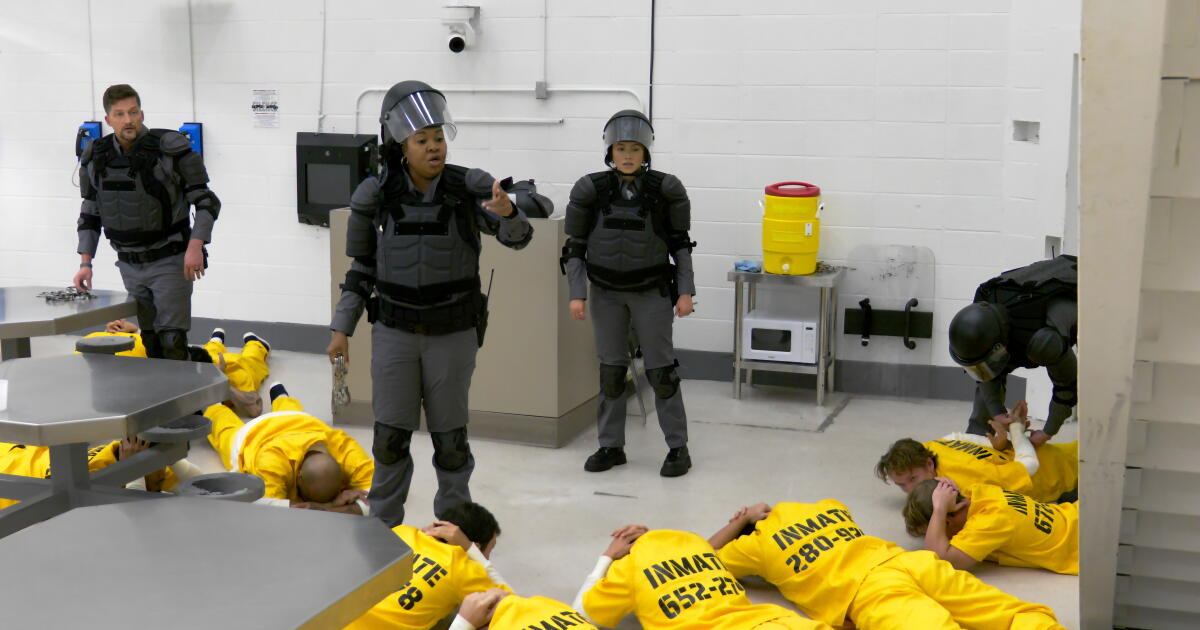
The latest addition to this genre is “The New Stanford Prison Experiment,” which launches as “A Netflix Experiment” this Wednesday. This series draws inspiration from the infamous 1971 Stanford Prison Experiment, a controversial study focused on power dynamics within a simulated prison environment. The original study intended to last two weeks but was cut short after six days due to the extreme behavior exhibited by the participants assigned as guards. The idea that power can corrupt isn’t novel—historical texts and literary works have explored it for centuries—but the show aims to delve deeper, albeit within the constraints of entertainment.
Netflix’s reinterpretation introduces its own set of assumptions while attempting to address the flaws of the original project. Rather than simply observing, the show includes a trio of commentators—behavioral psychologist Alison Wood Brooks, corrections expert Michael Cantrell, and journalist Trymaine Lee—whose insights often resemble sports commentary. Their discussions add a layer of analysis to the unfolding drama, despite occasionally sounding like they’re critiquing a game of football.
Unlike the original experiment set in a Stanford basement, this series takes place in an actual prison in Georgia. The 30 participants are not just college students, but a diverse group of individuals with various life experiences, some of whom have faced personal challenges. They enter the environment not only as subjects of an experiment but also as reality show contestants, hoping to gain something meaningful from the experience, even if there’s no monetary reward offered.
The show unfolds in four distinct phases: transition, hierarchy, role reversal, and self-governance. These structured stages energize the participants’ interactions, which occasionally resemble typical prison life—prisoners venting frustrations about guards and vice versa. As the phases progress, tension builds, ultimately leading to a compelling narrative arc that keeps viewers engaged.
However, the core conflict extends beyond prisoners versus guards; it’s also a battle against the very structure of the experiment. One participant, Pete Zaremba, expresses his reluctance to embrace the guard role he plays daily and instead seeks to disrupt the status quo. This awareness of the experiment’s artificiality creates a dynamic tension among the participants, with some becoming weary of their roles while others strive to excel within them.
Ultimately, “The New Stanford Prison Experiment” doesn’t present any sweeping theories about human nature; rather, it underscores the diversity of human behavior. Different participants respond uniquely to power dynamics—some seek connection and teamwork, while others desire distance and control. Regardless of the expectations set by the format, the show captures the essence of human interaction, delivering a compelling blend of entertainment and intrigue across its six-episode run.
Read more about this topic:
‘The New Stanford Prison Experiment’ review: A project reimagined for TV


