The climate for undocumented immigrants in the United States has become increasingly alarming. Despite numerous protests and opposition, ICE continues its aggressive enforcement in communities. A tragic example was the shooting of Colombian immigrant Johan Sebastián Durán Guerrero by an ICE officer during a routine traffic stop in Biddeford, Maine, in July.
However, there exists a different narrative for those who are white-passing undocumented immigrants, who often evade the scrutiny faced by others. This includes individuals from Eastern Europe and the former Soviet Union. The plight of young women who posed for photographs amidst the chaos of the Soviet Union’s collapse, hoping to attract an American partner, is often overlooked.
Book Review
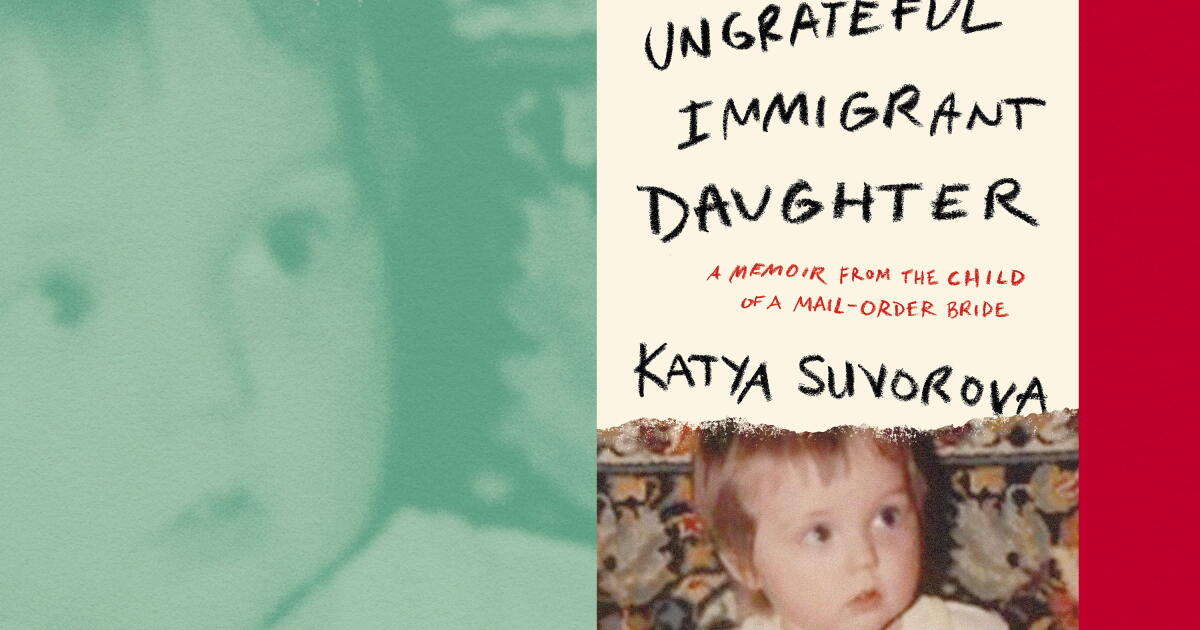
Ungrateful Immigrant Daughter: A Memoir from the Child of a Mail-Order Bride
By Katya Suvorova
Alcove Press: 352 pages, $30
Purchases made through the links on our site may earn a commission for The Times, supporting independent bookstores.
In her poignant debut memoir, “Ungrateful Immigrant Daughter: A Memoir from the Child of a Mail-Order Bride,” released on September 29, Katya Suvorova tells a compelling story that challenges the stereotypical view of post-Soviet mail-order brides, revealing a deep and personal immigration narrative.
Having come from Soviet Belarus in the early 1990s, I grew up influenced by the media portrayal of Eastern European women as mere objects seeking financial stability. Some of my classmates judged me based on these stereotypes, assuming I was “easy” due to my background.
In Suvorova’s memoir, she recounts her family’s journey as undocumented immigrants after crossing the border from Mexico, aided by a man who responded to her mother’s mail-order bride ad. Years later, while cleaning the garage, Suvorova discovered a catalog that revealed the truth: her mother had not been the glamorous model Suvorova thought, but a desperate young woman seeking a better life. When confronted about it, her mother’s response was, “Everyone was doing it.”
Historically, mail-order brides played a significant role in early American settlements when lonely men sought companionship. While the stigmatization of mail-order brides began to emerge in the late 20th century, protective laws like the International Marriage Broker Regulation Act were only established in 2005 to safeguard against exploitation.

Author Katya Suvorova
(Alcove Press)
Throughout “Ungrateful,” Suvorova delves into the trauma inflicted by her environment. She vividly recounts her early memories of her mother enduring abuse and her own struggles with neglect, all while being thrust into the role of a child bride to cater to her mother’s husband. In confronting her mother about the past, she comes to a profound realization — both she and her mother were exploited by the same systems.
The stigma of being a “gold digger” also looms large in their lives. Suvorova details how her mother was often accused of seeking wealthy partners, despite their circumstances, and how she employed cunning strategies to survive. Ultimately, the quest for stability and American citizenship drove them both to pursue a life at any cost.
Reflecting on my own experiences, I once donned a mail-order bride costume for Halloween, not fully appreciating the complex narrative behind it. A critical interaction at that party made me realize the discomfort and stereotyping surrounding this identity that Suvorova contends with in her memoir.
Suvorova’s writing brilliantly connects historical immigrant struggles with contemporary issues faced by Russians, particularly under the current regime, making her story relevant amid modern-day geopolitical tensions. The risks associated with returning home resonate with many immigrants today, as illustrated by the recent experiences of individuals facing imprisonment for standing against the regime.
In a personal anecdote, the memoir resonates with my childhood friendship with a young model who ultimately escaped her circumstances and built a successful life. This juxtaposition highlights the diverse paths and choices faced by immigrant women.
Moreover, Suvorova’s narrative is not solely a tale of trauma; it is one of fortitude, growth, and rediscovery of cultural roots. Her relationship with family provides moments of redemption, echoing themes found in other notable memoirs that address overcoming adversity.
In the contemporary publishing landscape, Suvorova’s social media presence has garnered a substantial following, demonstrating the necessity for authors to establish a platform to reach audiences today.
Interestingly, Suvorova’s marketing strategy for her memoir has taken a quirky turn, with some editions featuring book-branded condoms, showcasing how authors employ creativity to promote their narratives.
Despite achieving citizenship through her investments in her education and hard work, Suvorova chose to relocate to Europe due to safety concerns around publishing her story amidst political climates in the United States. Her decision serves as a poignant reminder of the ongoing struggles many immigrants face in seeking both safety and acceptance.
This memoir prompts anyone reading it to reflect on the familial sacrifices made and the often unacknowledged privilege many take for granted. Suvorova gracefully navigates these complex themes, revealing that grumbling about one’s immigrant status can mask a deeper gratitude for the opportunities afforded to them.
Ruzova is a Soviet-born writer based in Los Angeles. Her essay “The Sauna” was a notable in Best American Essays 2025.
Read more about this topic:
The truth about Soviet mail-order brides: Inside Katya Suvorova’s new memoir


