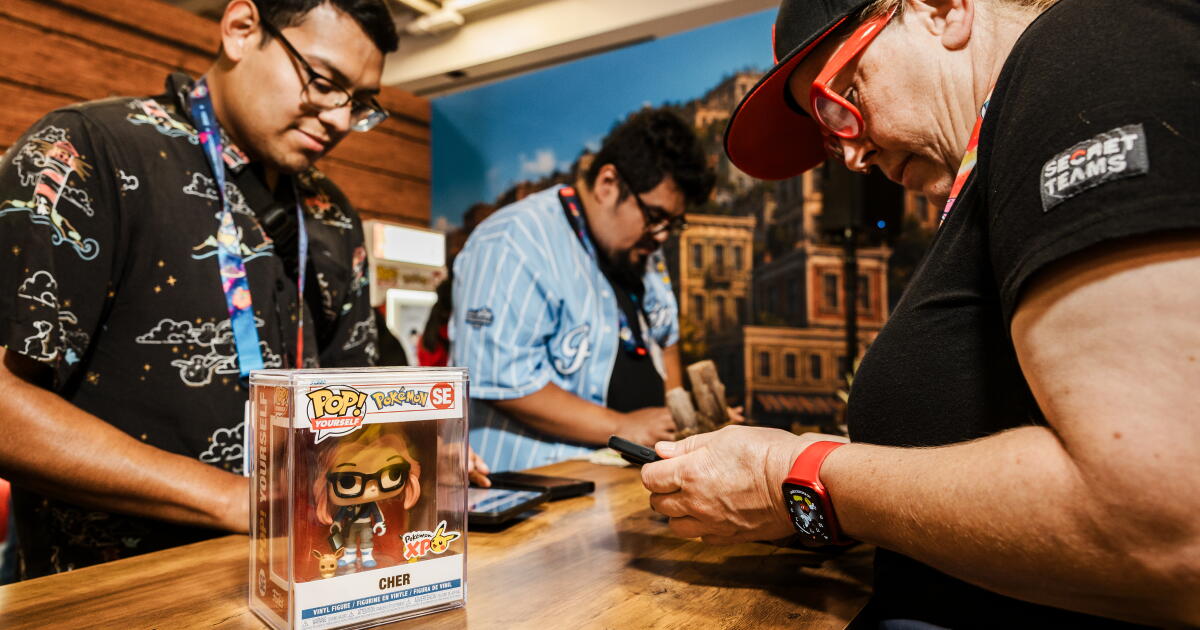
For many stars, the creation of a Funko Pop! figurine resembling them marks a significant achievement in the entertainment industry. These 4-inch vinyl figures, characterized by their oversized heads and black dot eyes, represent an iconic part of pop culture, cherished by fans who buy, collect, and showcase them.
Funko’s main store in Hollywood boasts an extensive selection, with options that range from NFL athletes to Disney royalty and even characters from popular shows like Netflix’s “Bridgerton.”
However, the company behind these beloved collectibles, Funko Inc., has encountered serious challenges. Last year, the company reported a loss of $67.4 million, with total sales reaching $908.2 million—a 13% decline compared to the preceding year. Additionally, Funko revealed it had accumulated debts amounting to $225 million.
In investor disclosures, the Everett, Washington-based company expressed “substantial doubt” regarding its capacity to generate sufficient cash to cover its debt obligations. This instability was attributed to factors such as tariffs imposed in China—where most of Funko’s toys are produced—along with canceled retail orders and potential violations of loan agreements.
To address these issues, Funko is undergoing a strategic revival led by Josh Simon, who took on the role of chief executive in September 2025, following two transitions at the helm in just two years. Simon, previously overseeing global consumer products at Netflix, recognizes the need for revitalization at Funko, stating that while there’s substantial enthusiasm for the brand among retailers and fans, the company has pressing issues to resolve. Simon views this challenge as an exciting opportunity to rekindle the passion and fervor that once propelled the brand to fame.
### The Rise and Fall of Funko
Funko began its journey in 1998 when T-shirt designer Mike Becker ventured into producing bobbleheads from his garage. The company gained momentum after entrepreneur Brian Mariotti acquired it in 2005, eventually launching its widely popular “Pop!” figures in 2010, which significantly boosted sales.
Throughout its history, Funko has changed ownership, expanded into different product categories such as backpacks, and went public in 2017. Most of its revenue continues to derive from licensed characters sold in various retail formats, including online and at events.
The company has faced considerable obstacles, particularly before the pandemic, when it misjudged demand, backtracked on character selection, and overproduced its figures. This led to discounted sales that antagonized collectors who prefer their items to appreciate in value. The global trade tensions, particularly the tariffs imposed by President Trump on China, further exacerbated its challenges, drastically increasing production costs.
What has kept Funko afloat amidst these downturns is the emergence of “kidults”—adults collecting toys. Simon identifies as one of these enthusiasts, having collected Pop! figures from franchises like “Toy Story” and “Back to the Future” long before his tenure at Funko. He emphasizes that the essence of Funko’s work lies in capturing what fans love about characters in a stylish form.
The company reports a high volume of requests from musicians, athletes, and various celebrities eager to be immortalized in Pop! form, viewing it as a hallmark of cultural relevance, akin to receiving a star on the Hollywood Walk of Fame.
### A Turnaround Strategy
Although headquartered in Washington, Funko maintains a significant presence in Los Angeles, where much of its leadership is based, along with employees in various global markets.
Under Simon’s direction, Funko has diversified its supply chain by relocating production from China to Vietnam and other countries. It has also restructured its credit agreements to improve cash flow and expedited the launch of new products.
Notably, Funko rapidly developed figurines of characters from the Netflix hit “KPop Demon Hunters,” turning them around in approximately four months—significantly quicker than its competitors. In another instance, when WWE star John Cena prepared for his final match in December, Funko promptly set up pre-orders for a figure dressed in his match attire, reflecting an impressive response time.
The company is also redefining what qualifies as a license. It is crafting figures from popular literature, like Holly Black’s “The Folk of the Air,” and designing more original characters that don’t require licenses.
Engagement with fans remains a priority for Funko. At last month’s PokémonXP convention in San Francisco, the company hosted a Pop! Yourself booth where attendees could create custom figures featuring exclusive outfits and Pokémon.
As evidence of progress, Jeff Leu, a collector from San Francisco, has expressed excitement over the diverse options Funko offers, highlighting how the expansion encourages him to continue growing his collection.
So far, early results of the turnaround strategy appear promising. In the second quarter, Funko reported a 7% increase in sales, totaling $207.7 million, along with a net income of $15.4 million, a significant shift from a loss of $40.5 million a year prior. However, it’s worth noting that the quarter included a notable $25.4 million in anticipated tariff refunds.
Currently, Funko’s stock is trading around $5.50, up by 1%. While it has risen 38% over the past year, it remains 60% below its January 2025 levels. Experts indicate that it is premature to make definitive assessments about Simon’s leadership, but they appreciate his efforts and view this as a pivotal moment in Funko’s evolution, presenting promising growth opportunities.
Read more about this topic:
Funko faced a cash crunch. Its new CEO came from Netflix with a plan.