Hollywood has a longstanding heritage of adapting literary works into visual media, often sparking lively discussions among fans. Before its premiere, Zoe Kazan’s fresh take on John Steinbeck’s monumental 1952 novel, “East of Eden,” generated quite a buzz on social media, particularly among the book’s devoted readers.
The focus of much of the conversation has been on Kazan’s bold portrayal of the character Cathy Ames—long known as a key figure of evil within the text—in Netflix’s seven-episode limited series set to release on Thursday. Steinbeck’s rich, multigenerational narrative delves into themes of family, individual choice, and the duality of good and evil, paralleling the biblical tales of Cain and Abel and the fall of mankind through the stories of two families, the Trasks and the Hamiltons. Cathy Ames serves as a dark catalyst for the events that unfold.
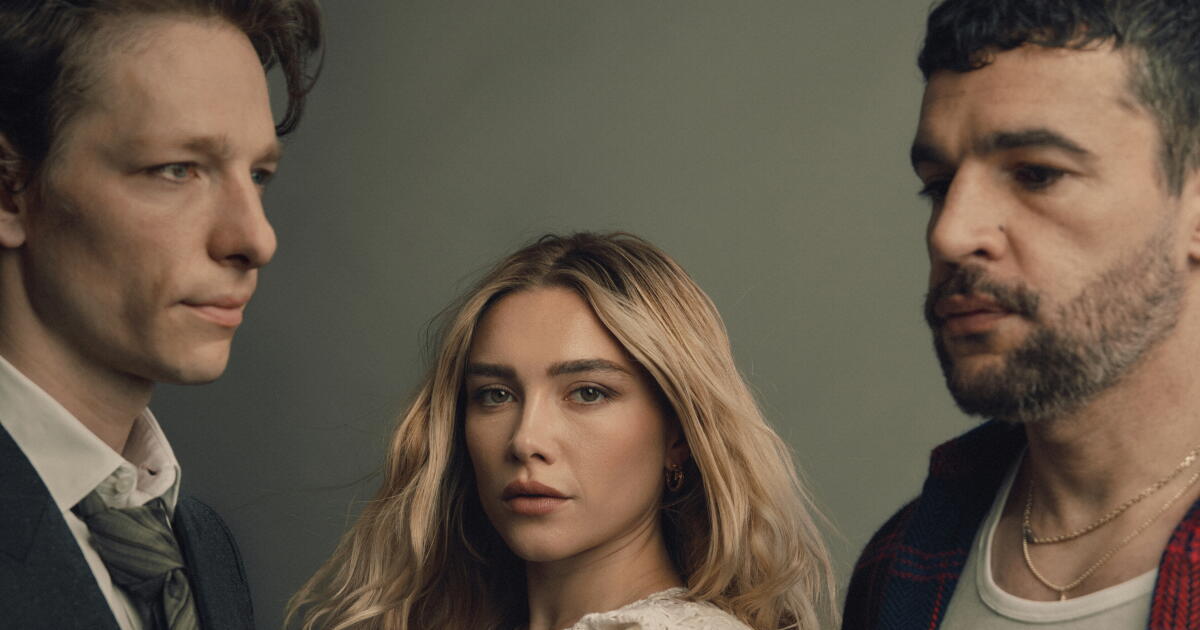
Kazan streamlined the Hamilton family storyline in favor of centering on Cathy (played by Florence Pugh), whose entrance profoundly impacts the lives of Trask brothers, Adam (Christopher Abbott) and Charles (Mike Faist). By doing so, she endeavors to add complexity to a character infamously labeled as a “psychic monster,” devoid of remorse or compassion.
“I’ve been trying to conserve my mental health by staying off social media,” Kazan shared during a video call from London. “It’s no surprise that this character evokes strong opinions. I’m eager for viewers to engage with what we’ve created and see the story from our perspective rather than just their expectations.”
When Kazan first proposed the series in 2019, she already envisioned Pugh in the role of Cathy after being impressed by her performances in films like “Midsommar” and “Little Women.” “The range in her talent was striking,” Kazan noted. “I knew if anyone could embody the complexity and intrigue of Cathy, it would be her.”
As for Adam and Charles, Kazan recognized the depth Abbott and Faist could bring to their characters, especially in exploring the psychological nuances inherent in their relationship. “I wanted Adam to reflect the influences of both his true nature and the pressures from his father—and the same for Charles.”
Adapting a classic text presents unique challenges, particularly with an acclaimed work like “East of Eden,” which has previously been translated for film. Kazan’s choice to tackle this particular story resonates personally, being the granddaughter of Elia Kazan, who directed the famed 1955 adaptation starring James Dean. Abbott commented on the pressures of adapting such a seminal work, stating, “With a beloved book, audiences always have high expectations—it’s a monumental task.”
Pugh added, “I’m excited for viewers to rediscover the source material and analyze how it complements our interpretation of the characters.”
In a recent interview, Pugh, Abbott, and Faist discussed their journey of bringing Steinbeck’s epic to life and how they’ve explored the timeless themes within the story through their portrayals.
Reflecting on their initial encounter with the book, Faist shared that he first experienced the story through the classic film, while Pugh encountered it in her early twenties. Abbott mentioned that he had attempted to read it several times before taking part in this adaptation.
Cathy Ames, as a character, has sparked debate among audiences for her representation, often viewed as purely villainous yet also inviting deeper exploration of her motivations. Pugh expressed her enthusiasm for portraying characters that challenge traditional perceptions of evil, stating, “It’s thrilling to find a human side to a character often deemed a monster.”
This nuanced portrayal has taken new shapes in the series, with Kazan’s guidance allowing Pugh to reveal Cathy’s vulnerabilities alongside her darkness. Pugh elaborated on Cathy’s backstory, highlighting the significance of her traumatic childhood and its lasting impact. “She is not simply evil; her experiences shape her actions, and as a viewer, it’s important to recognize that complexity.”
The actors delved into their characters’ intricate dynamics, particularly the relationship between brothers Adam and Charles, which Abbott noted is fraught with complexities stemming from both their shared bloodline and life experiences.
As Kazan brought the siblings’ psychological rivalry to the fore, she aimed to explore not only the darkness within them but also their capacity for love, shaped by various pressures.
As the series draws nearer to its debut, Abbott reflected on the pivotal moment of delivering the word “timshel”—a central theme of the narrative—during the closing scenes, capturing the weight of the character’s journey.
In exploring why “East of Eden” continues to resonate, Abbott speculated on the universal themes at play: “Displacement, familial connections, and love—they transcend time.”
Pugh added, “It speaks volumes about generational trauma and the potential for healing,” remarking on how such themes maintain relevance in contemporary discussions on race, immigration, and personal growth.
As anticipation builds for the series, the actors and Kazan remain excited for audiences to experience their adaptation—a fresh lens on a classic narrative steeped in the human condition.
Read more about this topic:
‘East of Eden’: The cast on Zoe Kazan’s vision and meaning of timshel