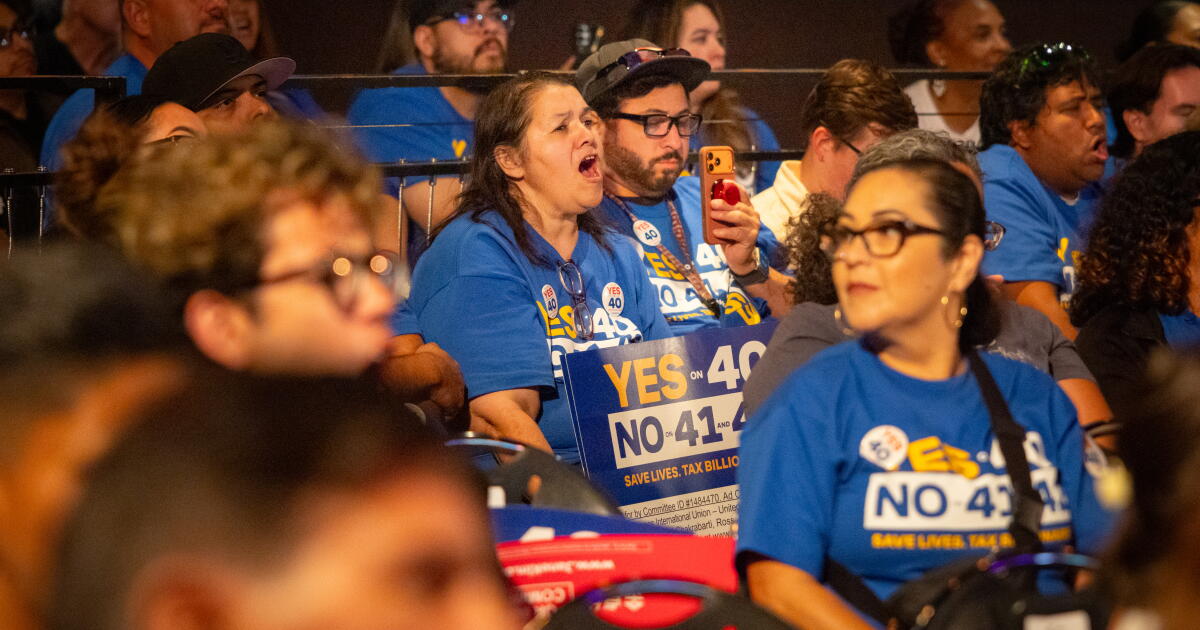
As California contemplates imposing a new tax on billionaires, the state’s prominent social media influencers are becoming increasingly active in the debate and are often being compensated for their endorsements aimed at voters.
A diverse array of influencers, including food enthusiasts, mothers, and retirees, are voicing their opinions about Proposition 40, which proposes a one-time 5% tax on the assets of approximately 200 billionaires in the state. Opponents of the measure are also rallying support through other proposed ballot initiatives.
Political campaigns are eager to collaborate with influential online personalities, recognizing that their endorsements can resonate more effectively with voters than traditional advertisements. Bartley Chavez, a mother and influencer with over 47,500 Instagram followers, recently posted a video opposing Proposition 40 while sharing cheerful moments of family life, stating her concerns about the impact of the tax on jobs and California’s economy. The video disclosed that the campaign opposing Proposition 40 had financially supported her post.
However, diving into political topics on social media can have its drawbacks. In response to her post, some users expressed their displeasure, while others offered their support.
Leigh McGowan, an author and political commentator with a substantial following of over 3.5 million across various platforms, also voiced her stance on the wealth tax after receiving payment for her posts. In a sponsored video, she emphasized that the proposal aims to ask the wealthiest individuals to contribute fairly, rather than punishing them.
The increasing relevance of influencers in political discourse reflects a shift among younger voters, who often turn to these voices for news and opinions, often distrusting traditional media outlets. McGowan noted that influencers who share their genuine beliefs tend to gain more trust from their audiences.
Political advertising in California for the 2026 election is projected to reach nearly $1 billion, with a significant portion earmarked for digital platforms like Facebook, Google, and Snapchat. The campaign against Proposition 40 has garnered substantial financial backing, with numerous high-profile donations, leading to one of the costliest ballot battles in the state’s history.
While campaigns disclose overall spending on digital media, they are less transparent regarding the specific amounts allocated to influencers. As social media remains a central avenue for political messaging, campaigns are increasingly recognizing the importance of engaging influencers within these platforms.
The landscape of political influence is shifting, with some influencers opting not to accept payment for their opinions, believing in the cause itself. One such influencer, known as The Speech Prof, shared a viral video in which he disclosed rejecting financial offers to oppose the billionaire tax. He later expressed his support for the tax in another sponsored post, emphasizing the ethical nature of his choice of campaign partners.
Despite the heavy spending by opponents of the billionaire tax, advocates for the measure assert their success on social media platforms. They argue that even if outspent, their campaign has managed to resonate with audiences effectively.
Affiliates of both sides are navigating the complex dynamics of influencer endorsement, often promoting ballot measures that could influence the outcome of Proposition 40. For instance, Proposition 42 seeks to prevent new taxes on personal savings and retirement holdings, creating potential conflicts should both measures pass.
Influencers, such as retired teacher Karen Clay-Fenderson, engage in discussions about these propositions while remaining cautious about their influence, insisting that audiences make informed decisions on their own.
In an effort to ensure transparency in political endorsements, California has enacted legislation requiring influencers to disclose compensation received for political posts. Those who fail to comply could face fines. Individual platforms, like Instagram and TikTok, have their own policies regarding political content, which influencers must navigate.
Campaign representatives stressed the importance of partnering with content creators as a means to educate and engage voters about significant political issues, underscoring the evolving role influencers play in shaping public opinion.
Read more about this topic:
California’s billionaire tax battle is playing out on Instagram—with paid influencers